
Views: 0 Author: Site Editor Publish Time: 2026-06-19 Origin: Site


Heavy industries are shifting away from traditional structural materials like steel, aluminum, and wood. Harsh operational environments ruthlessly expose their inherent vulnerabilities. Advanced composite alternatives now provide a highly resilient infrastructure solution. Engineers and procurement teams face constant struggles against aggressive corrosion. Heavy weight penalties complicate remote installations. Dangerous electrical conductivity issues threaten worker safety in high-voltage zones. These recurring structural failures severely impact project timelines and compromise facility integrity.
We provide a strictly technical, evidence-based framework to guide your structural material evaluations. You will learn exactly when and how to specify FRP Pultruded Profiles for your next demanding project. We deeply explore matrix selection, specific structural shapes, and high-viability industrial application scenarios. This practical guide helps you identify the exact engineering thresholds where composites drastically outperform conventional metals.
FRP pultruded profiles outperform steel and aluminum in high-corrosion, electromagnetically sensitive, and weight-restricted scenarios.
Material selection must be precise: identifying the right matrix (e.g., Polyurethane vs. standard GRP) directly dictates load-bearing capacity and environmental resistance.
Proper integration requires specialized structural design software and alternative joining methods (mechanical fasteners/adhesives) rather than traditional welding.
Engineers must recognize the exact threshold where steel, concrete, and aluminum become massive liabilities. Traditional materials fail predictably under specific environmental stressors. We frame this structural problem around physical degradation and operational safety.
Harsh environments constantly expose structures to aggressive chemicals. Galvanization provides temporary protection. Epoxy coatings chip and degrade rapidly. Chlor-alkali plants destroy bare steel in months. Wastewater treatment facilities expose metals to dense hydrogen sulfide gas. Metals succumb to catastrophic galvanic corrosion under these conditions.
High-voltage zones present entirely different challenges. These areas require non-conductive and non-magnetic infrastructure. Electrical substations demand pure isolation. MRI facilities mandate completely non-magnetic support structures. Railway transit systems need highly safe pedestrian walkways. Metals pose severe electrocution and interference risks here.
Aging infrastructure often requires extensive retrofitting. Adding heavy dead loads is usually impossible. Pedestrian bridges simply cannot support extra steel weight safely. Offshore platforms operate under strict deck-load limits. Heavy lifting equipment struggles to navigate tight industrial spaces. Metals become logistically impossible to install efficiently.
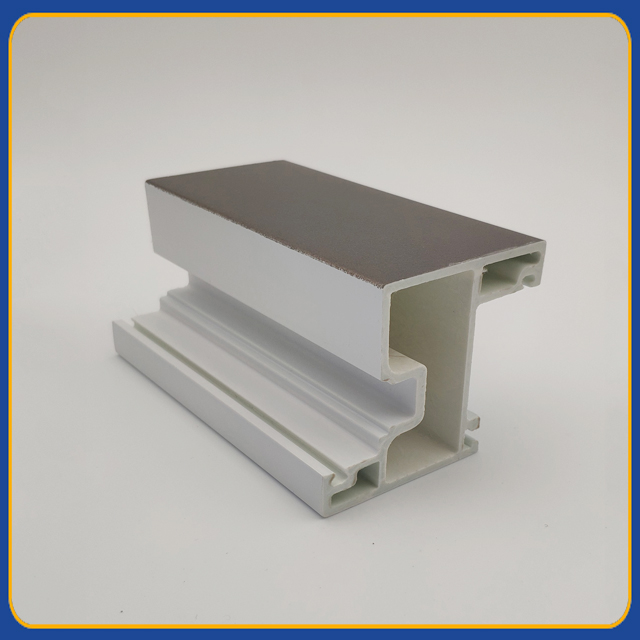
Resin and fiber systems perform very differently under load. You must match them accurately to your specific operational outcomes. Differentiating between solution categories ensures structural integrity.
We frequently specify Glass Fiber FRP Pultruded Profiles for diverse projects. Industry professionals also call them GRP FRP Pultruded Profiles. They dominate general industrial applications completely. They offer excellent chemical resistance. They possess very high dielectric strength. However, they carry specific limitations. They show lower impact resistance compared to advanced resin formulas. They remain the most economical composite baseline available.
High-stress structural applications demand superior mechanical properties. You should seriously consider Polyurethane FRP Pultruded Profiles. Engineers often abbreviate these components as PU FRP Pultruded Profiles. Polyurethane resin allows manufacturers to inject much higher glass content. This exact formulation delivers superior tensile strength. It drastically improves overall impact resistance. Fastener pull-out strength increases significantly. They require a higher initial material investment. They often represent overkill for simple non-load-bearing applications.
The global industry relies heavily on standard Fiberglass FRP Pultruded Profiles. They combine continuous roving fibers for exceptional longitudinal strength. They utilize continuous strand mats for essential transverse strength. This specific manufacturing combination creates highly predictable mechanical properties.
Aligning cross-sectional geometry dictates ultimate project success. Load requirements dictate the optimal shape. Mating components require very specific profiles. You must pair shapes correctly to ensure structural stability.
Square Tube FRP Pultruded Profiles offer excellent versatility. They are ideal for complex handrail systems. Modular frameworks rely on them heavily. Structural columns use them for symmetrical load distribution. They provide flat mating surfaces for easy assembly and secure grating attachment.
Long spans require entirely different geometries. Rectangle Tube FRP Pultruded Profiles handle these directional loads perfectly. They serve natively as robust beams and joists. Cross-bracing systems utilize their rigid nature effectively. They provide superior deflection resistance along their primary vertical axis. This trait makes them highly suitable for spanning longer distances safely.
Aerodynamics and ergonomics dictate other specialized choices. Round Tube FRP Pultruded Profiles fit these demanding needs seamlessly. They create comfortable ergonomic railing grips. Antenna radomes use them to shed wind efficiently. Fluid and cable conduit applications benefit from their smooth, snag-free exterior surfaces.
Profile Shape | Primary Industrial Application | Key Structural Advantage |
|---|---|---|
Square Tube | Handrails, Modular Frameworks, Columns | Symmetrical load distribution, flat mating surfaces |
Rectangle Tube | Beams, Joists, Cross-bracing | Superior primary-axis deflection resistance |
Round Tube | Railing grips, Antenna radomes, Conduits | Aerodynamic efficiency, ergonomic handling |
Certain industries push traditional materials beyond their absolute breaking points. Composites thrive under these exact extreme conditions.
Marine & Offshore Operations: Walkways and grating supports endure brutal ocean conditions. Splash-zone structures face constant saltwater assault. Composites offer total saltwater immunity indefinitely. They provide crucial weight reduction for remote logistics. Helicopters transport these lighter materials much more easily to distant oil rigs.
Chemical & Wastewater Processing: Tank supports and baffles require immense resilience. Access platforms sit directly above corrosive vats. These profiles resist hydrogen sulfide easily. They endure violently varying pH levels continuously. You never need to apply secondary protective coatings.
Telecommunications & 5G: Cell tower concealments demand specific non-interfering properties. Antenna supports must remain completely invisible to signals. Composites provide absolute EMI and RFI transparency. They simply do not block critical RF signals.
Transportation & Infrastructure: Bridge decks carry heavy, repetitive daily traffic. Railway crossing gates operate continuously in all weather. Sound barriers line extremely busy highways. Composites provide exceptionally high fatigue tolerance. Low weight ensures extremely rapid installation during brief road closures.
We must acknowledge engineering challenges transparently. Transitioning to composites requires specific structural knowledge. You cannot treat them exactly like traditional metals.
Composites behave differently than steel structurally. FRP has a significantly lower modulus of elasticity. Deflection limits usually govern the entire design process. Ultimate yield strength is rarely the primary deciding factor. Engineers utilize specialized software like RISA-3D extensively. This advanced software accurately models these unique anisotropic materials.
Connections present very unique complexities. You absolutely cannot weld composites together. We rely heavily on specialized through-bolting techniques. High-strength structural adhesives provide excellent permanent joint strength. You must manage localized crushing forces carefully. Hollow sections require rigid internal spacers to prevent crushing under extreme bolt tension.
Environmental compliance matters greatly to modern facilities. Stakeholders demand strong ESG metrics continually. You can easily obtain Environmental Product Declarations (EPDs) for composite materials. They are inherently petroleum-based materials. However, their extended operational lifecycle offsets initial manufacturing impacts. Lower transport emissions improve the overall Life Cycle Assessment drastically. They consistently outperform heavy metals in long-term sustainability metrics.
Ultraviolet degradation presents a genuine outdoor risk. Direct sunlight causes fiber blooming over extended periods. You must manage this reality proactively. Mandate the use of synthetic surfacing veils during fabrication. Specify strong UV inhibitors in the resin mix for all outdoor scenarios.
Material selection requires a rigorous, logical evaluation. Use this framework to finalize your specification decisions.
Does the environment actively degrade steel or aluminum rapidly?
Is electrical or thermal conductivity an active safety hazard for personnel?
Will installation downtime and heavy-lifting equipment constraints disrupt the project timeline?
Procurement teams must demand comprehensive specification sheets immediately. These documents must detail critical mechanical properties clearly. Request exact tensile and flexural strength data. Review the Barcol hardness ratings carefully to gauge surface durability. Verify all dimensional tolerances before ordering initial sample pieces.
Environmental Condition | Traditional Metal Performance | Composite Profile Performance |
|---|---|---|
High Corrosivity (Chemical/Salt) | Rapid degradation, requires constant coating | Immune, zero coating required |
High Voltage Proximity | Dangerous conductivity risk | Excellent dielectric insulator |
Weight Restricted Areas | Requires heavy lifting machinery | Lightweight, manual placement often possible |
FRP pultruded profiles are not a blanket replacement for steel. They serve as a highly specialized structural solution. They excel in environments actively punishing traditional materials. You must evaluate your structural demands carefully against material capabilities. Understanding deflection limits ensures safe, long-lasting framework designs.
We advise engineers to consult directly with established manufacturers early. Discuss exact resin-to-fiber ratios tailored to your environment. Explore custom shape dies for high-volume structural projects. Proper specification today prevents catastrophic structural failures tomorrow.
A: Yes, they offer remarkably higher strength. Polyurethane resin allows manufacturers to pack much more glass fiber into the profile. This directly increases both transverse strength and overall impact resistance. They handle heavy structural loads far better than standard polyester profiles.
A: They provide an exceptional strength-to-weight ratio. They weigh approximately seventy-five percent less than steel equivalents. However, their modulus of elasticity is lower. You must design structures based on deflection limits rather than ultimate yield strength. They will flex more than steel under identical heavy loads.
A: Yes, you can use them outdoors successfully. However, direct sunlight eventually degrades standard unprotected resins. This causes undesirable fiber blooming. You must explicitly specify built-in UV inhibitors during manufacturing. You should also require polyurethane surface veils to protect the exterior finish permanently.
A: Standard geometric profiles ship very quickly from inventory. Custom shapes require dedicated tooling and custom dies. Producing a unique die adds a few weeks to your initial timeline. You must weigh this engineering timeline against your immediate structural needs. High-volume structural projects easily justify these custom tooling requirements.