
Views: 0 Author: Site Editor Publish Time: 2026-08-03 Origin: Site


Industrial environments face relentless physical and chemical punishment daily. Facilities like chemical plants, wastewater treatment centers, and offshore marine rigs struggle with compounding maintenance demands. Metal degradation creates enormous safety hazards and structural uncertainties. Over time, oxidized steel and pitted aluminum compromise critical load-bearing capacities, leading to dangerous structural failures.
While composites are heavily marketed as "corrosion-proof," actual performance depends strictly on environmental matching, resin selection, and fabrication quality. Engineers cannot rely on blanket marketing claims when specifying structural materials. You must evaluate the specific chemical exposure, thermal variations, and mechanical loads present at your facility.
This article provides engineers and procurement teams with a clear, fact-based framework. We will evaluate the longevity, limitations, and structural viability of FRP composites in corrosive environments. You will learn how resin matrices dictate chemical resistance, why profile geometry matters, and how to avoid common installation failures.
Corrosion resistance in composites is not universal; it is dictated by the specific resin matrix (e.g., Vinyl Ester vs. Polyurethane), not the glass reinforcement.
Profile geometry (round vs. square) impacts fluid pooling and exposure duration, requiring specific structural design choices.
Unsealed cut edges and prolonged UV exposure are the primary failure points for FRP, necessitating surfacing veils and proper installation protocols.
While upfront costs may be higher than carbon steel, the Total Cost of Ownership (TCO) drops significantly when maintenance and replacement cycles are factored in.
We must first debunk the broad "corrosion-proof" label often attached to composite materials. Composites do not oxidize or rust like metals. They skip galvanic corrosion entirely because polymers lack the free electrons required for electrochemical reactions. Rust requires an anode, a cathode, and an electrolyte. Metals inherently provide all three. Composites provide none.
However, composites can still suffer from chemical degradation if you misapply them. Harsh acids, strong alkalis, or aggressive solvents can cause severe swelling, surface cracking, or complete resin breakdown. You must understand the distinct roles of the internal matrix and the structural reinforcement to prevent these failures.
The resin system serves as the primary chemical and environmental barrier. It acts as the frontline defense against chemical attack. Products like Glass Fiber FRP Pultruded Profiles and GRP FRP Pultruded Profiles rely on the internal fiberglass purely for tensile and flexural strength. The glass fibers themselves remain highly vulnerable. Alkaline solutions can aggressively dissolve the silica inside exposed glass fibers if the protective resin barrier fails.
To prevent this, reputable manufacturers incorporate synthetic surfacing veils during the pultrusion process. These veils are thin, non-woven fabrics. They absorb resin heavily, creating a dense, resin-rich outer layer. This specific layer protects the internal glass fibers from direct chemical exposure.
Best Practice: Always specify products manufactured with synthetic surfacing veils when designing structures for splash zones or chemical immersion areas. Without a veil, the profile lacks essential surface durability, and minor scratches can expose structural fibers to immediate chemical attack.
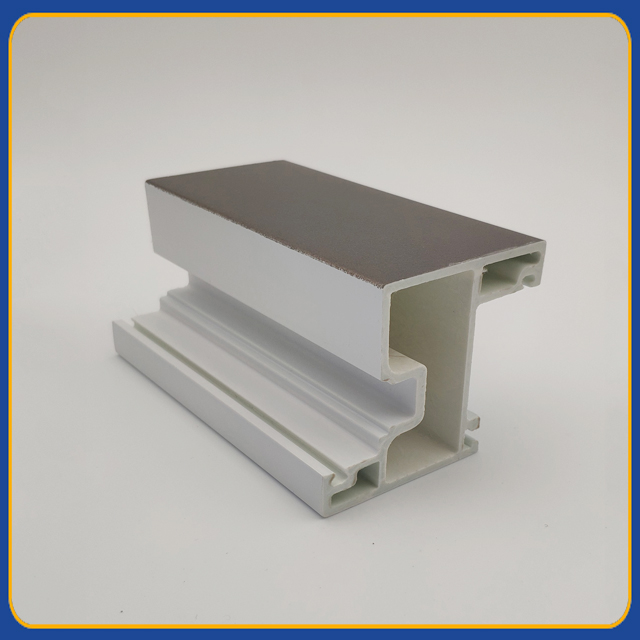
Matching the chemical environment to the appropriate polymer matrix forms the core decision framework for composite engineering. Acids, bases, solvents, and salts interact differently with distinct polymers. Specifying the wrong resin guarantees premature structural failure.
Standard resins, such as isophthalic and orthophthalic polyesters, work best for moderate, general-purpose environments. You should use them for applications experiencing occasional splashing or mild atmospheric moisture. They offer a baseline level of protection but will degrade rapidly under constant acidic immersion.
Vinyl ester resins remain the industry standard for severe chemical processing facilities. Choose vinyl ester for highly acidic and caustic environments. The molecular structure of vinyl ester contains fewer ester groups, making it inherently more resistant to water absorption and chemical hydrolysis.
Polyurethane resins offer a highly specialized alternative. You should evaluate Polyurethane FRP Pultruded Profiles when your environment requires a hybrid of high chemical resistance, superior impact toughness, and reduced overall weight. Polyurethane possesses a high cross-link density but remains exceptionally tough. This toughness resists micro-cracking during heavy physical impacts. Micro-cracks often serve as pathways for corrosive chemicals. Therefore, we frequently see PU FRP Pultruded Profiles outperform traditional resins in high-stress, dynamic load applications.
Resin Type | Primary Strength | Chemical Resistance Level | Ideal Application Environments |
|---|---|---|---|
Orthophthalic Polyester | Economical baseline protection | Low to Moderate | Light industrial, mild weather exposure |
Isophthalic Polyester | Improved moisture resistance | Moderate | Wastewater facilities, splash zones |
Vinyl Ester | Extreme corrosion resistance | High | Chemical plants, acidic immersion, chlorine exposure |
Polyurethane (PU) | High impact toughness & wear resistance | High (Dynamic) | High-impact zones, heavy load structures, abrasive environments |
Corrosive fluids, rainwater, and debris pool naturally on different profile shapes. Pooled liquids accelerate localized wear. Geometry directly dictates exposure duration. For example, a minor 10% acid splash can become highly concentrated if it pools on a flat surface and the water evaporates. This spike in concentration can quickly exceed the chemical resistance limits of the underlying resin.
Square and rectangular profiles offer specific engineering advantages. Square Tube FRP Pultruded Profiles and Rectangle Tube FRP Pultruded Profiles offer excellent load-bearing properties. They provide easy, flat connection points for bolts and gusset plates. However, flat top surfaces require proper drainage planning. You must angle these profiles slightly or protect them to prevent dangerous chemical pooling.
Round shapes actively prevent fluid accumulation. Round Tube FRP Pultruded Profiles naturally shed liquids and debris. Gravity forces corrosive elements off the surface immediately. They perform exceptionally well in heavy splash zones, offshore marine environments, and continuous handrail systems.
You must also evaluate closed tubes against open sections like I-beams or channels. Closed sections minimize exposed surface area. Open channels, especially when oriented horizontally, collect debris. Trapped debris holds moisture and chemicals constantly against the resin surface, creating localized points of accelerated degradation.
Engineering procurement requires comparing upfront capital expenditure against long-term operational expenditure. Metals require constant painting, sandblasting, and localized repairs. These maintenance interventions demand scaffolding, hazardous work permits, and costly facility downtime. Composites minimize these operational interruptions significantly.
Consider performance in chloride-rich coastal or saltwater environments. Saltwater severely punishes metals. Stainless steel often suffers from localized pitting and stress-corrosion cracking over time. Conversely, Fiberglass FRP Pultruded Profiles remain inherently stable in salt water. They do not pit, nor do they lose structural thickness due to prolonged chloride exposure.
Aluminum introduces high galvanic corrosion risks. Aluminum handrails mounted on steel platforms require isolation pads. When these insulating pads fail, galvanic reactions quickly turn structural aluminum into weakened powder. FRP possesses strong dielectric properties. These properties completely eliminate the risk of galvanic degradation when you place composites in direct contact with dissimilar materials.
FRP drastically improves installation economies. Composites reduce handling complexities due to their lightweight nature. You can often eliminate heavy lifting equipment and cranes during site installation. Furthermore, composites remove hazardous hot-work requirements. You assemble them using standard mechanical fasteners and adhesives, eliminating the need for complex welding permits in volatile chemical plants.
Material Comparison | Corrosion Risk Factor | Maintenance Requirements | Installation Weight Profile |
|---|---|---|---|
Carbon Steel | High (Requires constant coating) | Frequent painting & sandblasting | Extremely heavy (Requires cranes) |
Aluminum | High Galvanic Risk | Isolation pads required | Lightweight |
Stainless Steel | Moderate (Pitting in chlorides) | Periodic polishing/cleaning | Heavy |
FRP Composites | None (Immune to oxidation) | Minimal (Washdown only) | Lightweight (Handled manually) |
Even the highest-grade composite structures will fail if you ignore critical installation vulnerabilities. You must proactively manage environmental stressors during the design phase.
Ultraviolet radiation actively breaks down unprotected polymer chains. Prolonged UV exposure causes "fiber blooming," where surface resin degrades and exposes raw glass fibers to the elements. These exposed fibers allow water ingress, which destroys the matrix during freeze-thaw cycles. To solve this, you must specify UV inhibitors in the initial resin blend. Always apply secondary polyurethane clear coats for structures facing intense outdoor exposure.
Machining presents a massive vulnerability. Cutting or drilling FRP Pultruded Profiles exposes the internal glass fibers directly to the environment. You must enforce mandatory sealing protocols.
Clean all cut edges and drilled holes thoroughly to remove dust.
Apply a two-part compatible resin sealer to all exposed fibers immediately.
Allow proper curing time before exposing the joint to harsh chemicals.
Unsealed edges invite chemical wicking. Capillary action acts like a straw, drawing acids deep into the profile. This hidden intrusion causes internal delamination, resin breakdown, and sudden structural failure without outward warning signs.
Thermal considerations also dictate performance. You must understand the specific Heat Deflection Temperature (HDT) of your chosen resin. FRP maintains its corrosion resistance only within its specified continuous operating temperature limits. Excessive heat softens the matrix, accelerating chemical permeation.
Request detailed chemical resistance charts from reputable manufacturers.
Base your material requests on exact chemical concentrations and expected operational temperatures.
Ask suppliers for accelerated weathering test data to verify long-term UV stability.
FRP pultruded composites offer exceptional, predictable performance in harsh industrial environments. However, this reliability only materializes when the resin system, profile shape, and sealing protocols are specified correctly. Relying on raw material marketing without matching the chemistry to your facility leads to disastrous structural failures.
Do not source materials based on upfront bids alone. Take the time to define the exact chemical agents, concentration percentages, and operating temperatures present in your application before requesting material specification sheets. Ensure your installation contractors strictly adhere to edge-sealing protocols.
As your next step, consult with an FRP application engineer. Cross-reference your specific site conditions against standard resin compatibility charts. This proactive evaluation ensures your composite structures deliver maximum operational longevity without unexpected maintenance interventions.
A: No, they are highly resistant to saltwater and chlorides. They do not rust, pit, or suffer from galvanic corrosion. This makes them significantly superior to steel and aluminum in marine applications. You only need to ensure proper UV protection is applied for components continuously exposed to direct sunlight.
A: Yes. While internal surfacing veils handle most direct chemical resistance inherently, secondary coatings prove highly beneficial outdoors. Applying high-quality polyurethane clear coatings is heavily recommended. These coatings block UV radiation, preventing fiber blooming and greatly extending the structural lifespan under direct, intense sunlight.
A: Unsealed ends cause capillary action. Corrosive chemicals travel along the internal glass fibers like water moving up a straw. This internal intrusion causes severe delamination, microscopic resin breakdown, and eventual structural collapse. Proper edge sealing with compatible resin remains a mandatory, non-negotiable installation step.