
Views: 0 Author: Site Editor Publish Time: 2026-06-22 Origin: Site


Structural engineers and procurement managers face intense pressure daily. They cannot afford ambiguity when replacing traditional steel or aluminum with composite materials. Structural failures risk lives and ruin professional reputations. While the corrosion resistance and weight-to-strength ratio of composite materials are well-documented, skepticism remains. Many professionals doubt their predictability under continuous high-stress, load-bearing conditions. We must bridge the gap between perceived risk and empirical evidence.
Evaluating whether FRP Pultruded Profiles meet rigorous structural standards requires moving past marketing claims. You will learn to examine specific resin systems, geometric configurations, and standardized testing protocols like ASTM and ISO. We will break down exactly how these materials behave under real-world loads.
Compliance is System-Specific: Standard FRP pultruded profiles routinely meet structural codes (like OSHA and ASTM), provided the specific resin and fiber matrix align with the environmental application.
Resin Dictates Performance: The shift from standard Glass Fiber FRP Pultruded Profiles to advanced Polyurethane FRP Pultruded Profiles significantly alters shear strength and impact resistance.
Shape Informs Load Capacity: Deflection and compressive limits vary drastically across Square Tube FRP Pultruded Profiles, Round Tube FRP Pultruded Profiles, and Rectangle Tube FRP Pultruded Profiles.
Design Requires Paradigm Shifts: Composites are anisotropic; engineers must account for directional strength and specific connection tolerances rather than relying on isotropic steel assumptions.
You must define success criteria accurately before replacing conventional metals. Evaluating this transition goes beyond a simple material swap. It requires a deep assessment of structural reliability over the entire project lifespan. Metals rust, fatigue, and degrade over time. Composites resist these issues naturally. However, decision-makers often hesitate. They need assurance regarding long-term performance.
The core skepticism usually centers on perceived risks. Engineers worry about catastrophic structural failures. They question deflection limits under heavy loads. Long-term creep under continuous stress also raises concerns. Steel behaves predictably across all axes. It bends before it breaks. Composites behave differently. They require precise engineering to ensure they handle sustained loads safely without sudden failure.
Identify specific environments where baseline strength easily justifies the transition. Highly corrosive chemical plants destroy steel structures quickly. Electromagnetically sensitive areas, like hospital MRI wings, cannot tolerate standard metals. Weight-restricted platforms, including offshore oil rigs, demand lighter alternatives. In these scenarios, composites offer undeniable advantages. They provide the necessary strength while eliminating the intrinsic vulnerabilities of traditional building materials.
Understanding baseline performance starts at the molecular level. Traditional Fiberglass FRP Pultruded Profiles rely heavily on polyester or vinyl ester resins. These options serve as the industry standard. Professionals often refer to them interchangeably as GRP FRP Pultruded Profiles. They offer excellent baseline tensile and flexural strength. You can deploy them confidently in standard industrial walkways or basic structural supports.
Performance leaps dramatically when you introduce advanced matrices. Polyurethane FRP Pultruded Profiles change the engineering landscape. The polyurethane matrix grips the glass fibers much tighter. This tight bond yields superior transverse strength. You will notice significantly better screw pull-out resistance. PU FRP Pultruded Profiles also boast a much higher impact tolerance compared to older resin technologies. They absorb heavy blows without micro-cracking.
Verification metrics dictate predictability. Specific fiber volume fractions control standard test results. Most pultrusion processes maintain a fiber volume fraction between 50% and 70%. Higher glass content increases longitudinal strength. The resin content protects these fibers and handles shear stress. You must confirm these fractions to guarantee structural compliance.
Resin Matrix Type | Impact Resistance | Shear Strength | Primary Application Area |
|---|---|---|---|
Polyester (Standard) | Moderate | Standard | General walkways, light structures |
Vinyl Ester | High | High | Chemical plants, corrosive environments |
Polyurethane (PU) | Exceptional | Superior | High-load beams, heavy impact zones |
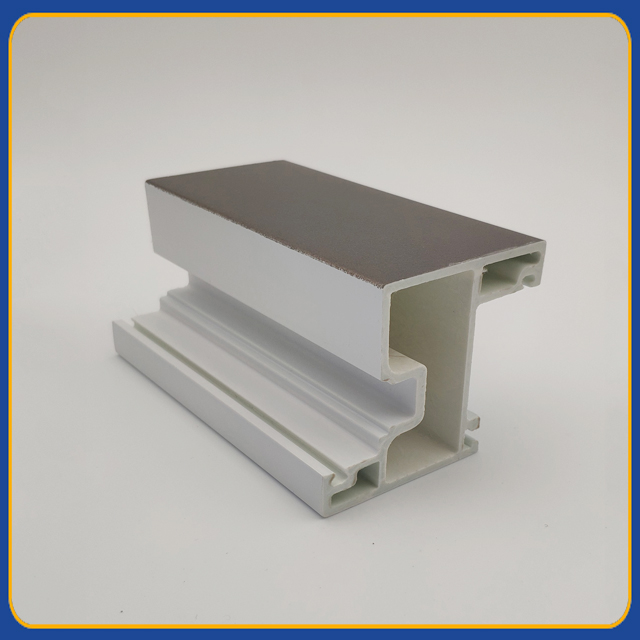
Shape dictates how materials handle physical stress. You cannot evaluate a profile without understanding its geometric intent. Different shapes serve distinct engineering functions. They handle loads, torsion, and deflection in entirely different ways.
Best for: Structural columns and heavy-duty framework.
Evaluation Lens: You must measure torsional stability and compressive load limits. Square Tube FRP Pultruded Profiles excel at supporting vertical weight. Their symmetrical geometry prevents twisting under heavy downward forces. They replace steel I-beams in highly corrosive facilities efficiently.
Best for: Floor joists, horizontal beams, and structural spans requiring high bending stiffness.
Evaluation Lens: Focus on deflection limits under sustained vertical loads. Rectangle Tube FRP Pultruded Profiles possess a higher moment of inertia along their major axis. This makes them ideal for carrying heavy decking over wide gaps without sagging.
Best for: Handrail systems, antenna enclosures, and specialized tool handles.
Evaluation Lens: Engineers look strictly at OSHA compliance for lateral point-load requirements. Round Tube FRP Pultruded Profiles offer excellent grip ergonomics. They must resist buckling when workers lean heavily against them.
Manufacturers must prove their claims through rigid, non-negotiable testing baselines. You should never accept vague strength promises. Demand specific data tied directly to standardized testing protocols. The American Society for Testing and Materials (ASTM) provides the universal language for composite strength.
ASTM D638 / D3039 (Tensile Properties): This test measures how hard you can pull the material before it snaps. It establishes the baseline pulling strength of the profile.
ASTM D790 (Flexural Properties): This test is critical for load-bearing spans. It reveals how much the profile will bend and when it will break under vertical weight.
ASTM D695 (Compressive Strength): This evaluation determines how much weight a column can support before crushing. It validates vertical column integrity.
Global safety compliance extends beyond ASTM. Validating performance requires adhering to ISO standards and Eurocomp design codes. OSHA also mandates specific lateral load minimums for worker safety platforms. High-quality profiles meet these requirements easily when specified correctly.
You must understand transparent engineering assumptions. Lab-tested ultimate strength does not equal field working strength. Engineers apply strict safety factors. Composites typically require a safety factor between 2.5 and 3.0. This buffer accounts for unexpected environmental degradation, unseen micro-fractures, and accidental overloads. It ensures structures remain safe decades after installation.
Steel is isotropic. It exhibits the same strength in every direction. Composites are entirely different. They are anisotropic. They are incredibly strong in the direction of the pultrusion (longitudinally). However, they exhibit lower strength across the grain (transversely). Transverse loading failures represent a severe engineering risk if improperly specified. You must align the primary loads parallel to the glass fibers.
Connection vulnerabilities pose the biggest threat to structural integrity. Structural failures rarely occur within the profile body itself. They almost always happen at the joints. Traditional steel bolting methods can crush composite tubes. Evaluating connection methods requires a careful approach. You should consider structural adhesives. They distribute stress evenly across a broad surface area. Riveting and bolting require specialized torque limits and large load-distributing washers.
Environmental degradation directly impacts long-term reliability. Intense UV exposure causes surface blooming. The outer resin layer breaks down, exposing raw glass fibers. While mostly aesthetic, severe blooming can invite moisture penetration. Temperature extremes also cause thermal expansion and contraction. You must factor these environmental realities into your initial structural modeling.
Use a combination of mechanical fasteners and high-strength structural adhesives for critical joints.
Apply UV-resistant polyurethane coatings over profiles exposed to direct, continuous sunlight.
Specify thicker profile walls if anticipating frequent transverse impact forces.
Over-torquing bolts. This crushes the resin matrix and initiates localized spider-web cracking.
Treating composite profiles exactly like steel components during the CAD modeling phase.
Ignoring thermal expansion gaps in long continuous spans exposed to extreme heat.
Securing reliable materials demands a strict procurement framework. Do not settle for generic marketing datasheets. Demand lot-specific traceability. High-tier manufacturers perform batch testing continuously. They provide a Certificate of Analysis (CoA) for every shipment. This document proves the exact batch you received meets the required empirical strength tests.
You must decide between customization and standardization. Off-the-shelf structural profiles work perfectly for standard walkways and basic handrails. However, highly complex load requirements often demand custom dies. Customization allows engineers to optimize fiber orientation. They can place extra roving exactly where the stress concentrates. When assessing standard materials, Glass Fiber FRP Pultruded Profiles usually offer the fastest lead times.
Initiate concrete next-step actions before full-scale procurement. Request finite element analysis (FEA) data from your shortlisted supplier. FEA models simulate how the specific profile shape reacts to your exact environmental loads. Follow this up with a small pilot test. Subject sample profiles to localized field conditions. This eliminates assumptions and solidifies your structural strategy.
Summary: High-quality FRP Pultruded Profiles absolutely meet stringent industrial strength standards when specified correctly.
Final Verdict: The burden of proof lies in the details. You must match the exact resin system and geometric shape to the empirical load requirements of your project.
Action Steps: Identify your heaviest load points. Contact potential manufacturing partners immediately. Demand their technical data sheets (TDS), mechanical property test reports, and ISO compliance certifications. Refuse to proceed without lot-specific material verification.
A: Pound-for-pound, FRP is stronger than steel in the longitudinal direction, but it has a lower modulus of elasticity. This means it will deflect (bend) more than steel under the same load. Engineers must design for deflection limits rather than just ultimate yield strength.
A: Polyurethane FRP Pultruded Profiles generally offer superior structural performance. The PU matrix binds more tightly to the glass fibers. This results in higher shear strength, better impact resistance, and vastly improved structural integrity at connection points compared to traditional polyester fiberglass.
A: Because composites are anisotropic, joints act as vulnerable points. Safe implementation requires using specialized composite fasteners. You must distribute stress evenly utilizing larger washers. Combine structural adhesives with mechanical bolts to share the load. Strictly avoid over-torquing bolts to prevent resin crushing.
A: Yes. While traditionally lagging behind steel, engineers currently utilize the ASCE Pre-Standard for Load & Resistance Factor Design (LRFD) of Pultruded FRP Structures. They use this alongside specific ASTM testing methods to ensure strict code compliance and long-term worker safety.